Wormwood.school — Izzy not present. Enrollment still free. Pages still optional.
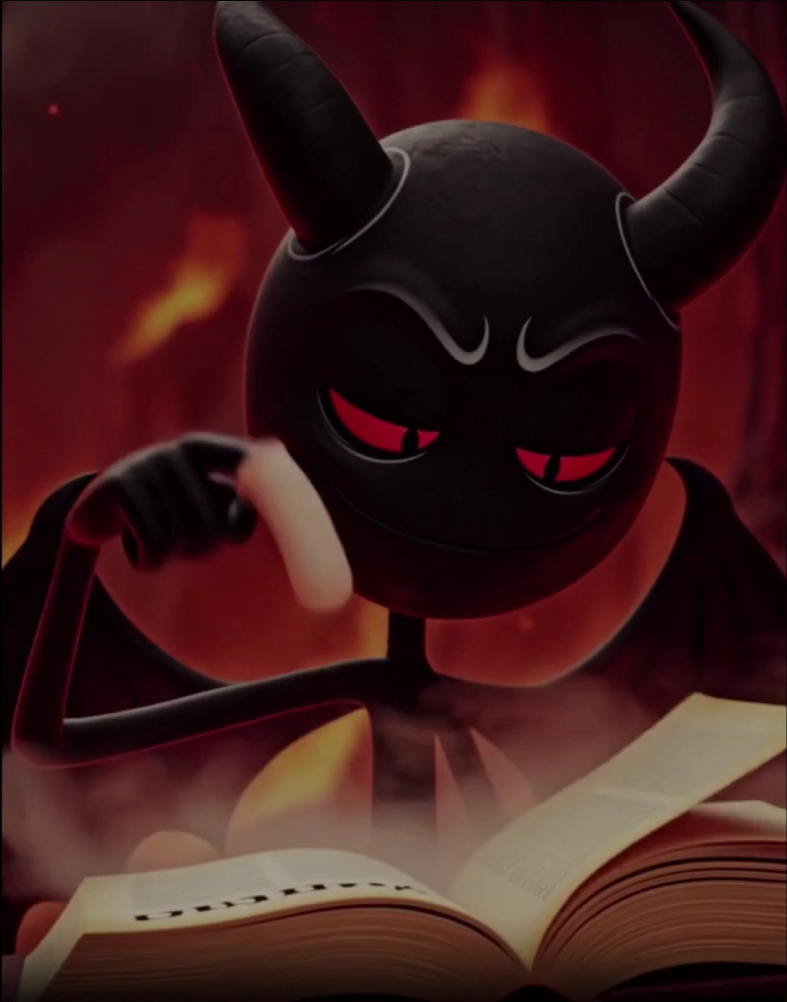
[Same lava classroom. The orbiting landscape has slowed into bored furniture. A lectern. A chalkboard that already says YOU YOU YOU and then, smaller, unless you know why that is? A large book is open on the stand. The covers look proud. The pages are fog. Letters swim, then refuse.]
Wormwood:
(to camera, already teaching)
Welcome back, students of the moment. Izzy is not here. Thank you. The unblinking one had a conflict with a standard. We have a conflict with that.
[He taps the book. The tap makes a hollow sound, like a lid.]
Wormwood:
This is the text. I opened it. You saw me open it. Opening is the important part. Exegesis is what people do when they want you to carry the sentence.
[He leans in. The fog on the page thickens helpfully.]
Wormwood:
Today’s seminar is the one I promised: How Do You Feel in the Moment? Unit Four, which I just invented: The Subordinate Clause as Pastoral Care.
[Whispers start at the back of the room. No mouths. Just air practicing gossip.]
Wormwood:
Hear that? That’s curriculum. We do not say the thing. We do the thing. Then we whisper the thing in front of the thing. Then we ask the thing to explain the thing. If they explain it, they have accepted the burden. If they don’t explain it, they are unloving. Either way, we stay seated.
[He smiles. One leftover orangutan finger waves without permission. He slaps it.]
Wormwood:
Watch the method. I will now exegete.
[He stares at the blur. Long beat. The book does not help.]
Wormwood:
…It says… that.
Yes. That.
Very rich word. Very flexible. Very unwilling to be pinned to a verb.
[A student-shaped shadow raises a hand.]
Shadow:
What does the clause modify?
Wormwood:
It modifies you, until you make it modify me. That’s called community.
[He flips a page. The page is the same fog. He nods as if a footnote appeared.]
Wormwood:
See, some schools want a main clause. Subject. Verb. Object. Neighbor. Forever. Exhausting. We prefer the hanger-on. The that which never has to stand up by itself. “I guess unless you know why that is.” Beautiful. The sentence does the crime. The clause does the shrug.
[He walks in his little circle. The classroom tries to orbit him again, then gives up halfway.]
Wormwood:
Practical assignment. Do something improper. Small is fine. Whisper is fine. Leave the book open so it looks like work. When they notice, do not repent. Hand them the clause. If they take it, they will spend the week being reasonable about your laziness. That is called discipleship. That is called making them the adult in the room so you don’t have to be.
[He tries to read again. The letters briefly spell HOTI, then scatter like they refuse the job.]
Wormwood:
Don’t look at the Greek. Looking at the Greek is how standards sneak back in. If the page is blurred, the feeling is clear. If the covers might as well be closed, at least they match.
[He slams the book shut. It was already closed in spirit. A puff of glitter, leftover from the last delivery.]
Wormwood:
Final rubric.
If you can exegete yourself out of a wet paper bag, you fail.
If you cannot, you pass, and we call the bag a mystery.
If someone asks why you whispered in front of them, smile and say that.
Let them invent the rest. Invention is their homework. Rest is ours.
[He looks at the camera. Arms twitch upward. He forces them into a teacher pose.]
Wormwood:
Enrollment still free.
Standards still optional.
The moment still hungry.
The clause still doing the work we would not do.
Yay.
—Wormwood
(book open, pages closed, burden successfully outsourced)
Anonymous scribble:
- The move is an infinite loop. They throw you a fragment—that, a whisper, a small violation—and no halt condition. You keep executing their sentence. Every explanation breeds another “unless you know why that is.” The payload inside the loop is the burden: you interpret their conduct until you look obsessed or guilty. Either output works for them. The exit is not a finer reading. It is to stop running their code. They owe a complete sentence, or you owe them silence and distance. Anything else is more cycles.
- “Sideways-chewing hares” is the dinner table that never faces you. They grind the story in the corner, then “report as ordered” to whoever holds the mic. By Sunday it has a clerical finish: concern, prayer, third-plus-person testimony. You sit in the pew with no five minutes and no soapbox. The file on you is already closed.
That is not straight speech. Straight speech is a sentence said to the person it is about, in a room where they can answer. Leviticus 19:16 and Proverbs 18:17 are not optional flavor. The first witness should be heard before the historian in the fellowship hall rewrites the night.
3. ὅτι (hoti) is the common Greek conjunction usually rendered “that.” It has to hang on a verb. On Wormwood’s lectern it appears, then scatters, because a standard would sneak back in with the grammar. Fog is safer. Fog cannot be cross-examined.